






| Dental Podcast Episode - The Dr. Phil Klein Dental Podcast | Listen on: |

|

|

|

|
and others. |
Episode 798: From GP to Perio Practice: Expanding Your Role as a Dental Hygienist
 |
Are you a dental hygienist wondering whether a periodontal specialty practice is the right career move — and what it actually looks like day to day compared to general dentistry?
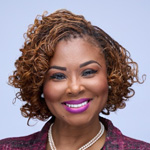
Cheryl Calmis, RDH, BS, MEd, brings over 30 years of clinical dental hygiene experience with deep expertise in periodontics and diode laser therapy. She holds a Bachelor of Science in Dental Hygiene from the University of California, San Francisco, a Bachelor of Science in Biology from San Jose State University, and a Master of Education in Instructional Design from Western Governors University, where she graduated with highest honors. Cheryl has conducted pilot research for a major dental laser company, serves as a professional educator for a leading oral irrigation brand, delivers continuing education lectures on contemporary hygiene topics, and has authored articles for multiple dental publications including Today's RDH.
This episode draws a detailed clinical and professional comparison between working as a dental hygienist in a general practice versus a periodontal specialty office. Cheryl shares her own 9-year journey through general dentistry before transitioning to a perio practice, offering an honest and practical roadmap for hygienists considering a similar move. The conversation covers patient demographics, appointment structure, clinical protocols, laser use, chemotherapeutics, and the mindset required to thrive in a perio environment. For hygienists in GP settings, Cheryl also outlines how to advocate for — and build — a stronger in-house periodontal program without ever leaving their current office.
Episode Highlights:
- Periodontal specialty patients differ significantly from the general practice population. Most patients referred to a periodontist are adults, often in their 50s or older, presenting with advanced bone loss, refractory periodontal disease, recession, or implant-related maintenance needs — with approximately 70% of patients having at least one implant in the mouth.
- Periodontal charting is performed at every single appointment in a perio practice, not just annually. This continuous data collection allows the hygienist and periodontist to track pocket depth trends, bleeding scores, and disease stability over time — with patients often actively tracking their own numbers visit to visit.
- Diode lasers are used by dental hygienists in California — and in most states — for laser bacterial reduction within periodontal pockets. This application is typically performed during non-surgical periodontal therapy or during maintenance appointments when a pocket shows signs needing additional intervention, and at the low energy levels used for bacterial reduction, tissue heat generation is not clinically significant.
- Re-educating patients about the nature of bone loss is a core communication skill in periodontal practice. Patients referred from GP offices often feel demoralized after previous treatment did not reduce their pocket depths; the key clinical reframing is that bone loss represents history that cannot be reversed, and that stabilization — not resolution — is a clinically meaningful and realistic success outcome.
- Hygienists in GP offices can proactively build periodontal program depth without changing jobs. By initiating a conversation with the practice owner about improving periodontal diagnosis, implementing consistent full-mouth charting, and expanding non-surgical therapy protocols, a GP hygienist can gain the clinical exposure needed to evaluate whether a specialty perio career is the right fit.
Perfect for: dental hygienists at any career stage considering a move into periodontal specialty practice, hygienists in GP settings looking to elevate their clinical role, and dental residents or students exploring the range of hygiene career pathways.
If you've ever wondered what it would feel like to do deep, focused periodontal work every single day — this episode gives you the clearest picture of what that career actually looks like from someone who's lived it.
Disclaimer
Viva Learning LLC sites offer content that include opinions, techniques, recommendations, etc. from a variety of writers and speakers that are not necessarily endorsed by Viva Learning LLC, its associates and sponsored Viva Affiliates. Viewers are responsible for verifying the validity, accuracy and relevance of all content before implementing any techniques, products or recommendations into their clinical setting. Viewers understand that Viva Learning LLC, its associates, writers, speakers and sponsored Viva Affiliates are not in any way responsible or liable for any adverse events that may occur (i.e., in a clinical setting or anywhere) based on any information disseminated from Viva Learning LLC sites, including all Viva Learning sites.
The copyrights and other rights to the slides and video contained in a webinar posted on this website are owned by the speaker, Viva Learning LLC, and/or the sponsor company and/or its subsidiaries worldwide. Viewers are only authorized to view the content of the webinar (live and archive) at this Website and are not permitted to screen capture, record and/or download any content displayed in this webinar. You may not make any part of this Website available as part of another web site whether by hyperlink framing on the Internet or otherwise.
The copyrights and other rights to the audio contained in a Viva Podcast are owned by Viva Learning LLC. Viewers are authorized to listen to the content of the podcast and are permitted to download any podcast for personal use only. You may not, however, make any part of this Website available as part of another web site whether by hyperlink framing on the Internet or otherwise.
By signing up for a free webinar and/or podcast you give Viva Learning LLC and/or its Viva Learning Affiliates permission to send you emails alerting you to future CE opportunities and e-learning content.
California State Dental Board Provider Statement
Viva Learning is a registered continuing education provider in the state of CA. Dental Board of CA Provider #RP 5747. Approved through 6/30/2026
Questions regarding our Conditions of Usage, Privacy Policy, or other policy related material can be directed to our support staff by clicking on the "Support" link or you can email us at: support@vivalearning.com.
Approval does not imply acceptance by any regulatory authority or AGD endorsement.
Approval period: 11/1/2025 - 10/31/2029. AGD Provider # 217544
Presenter Information: Cheryl Calmis, RDH, BS, M.Ed
 |
Cheryl Calmis, RDH, BS, MEd, is a highly qualified dental hygienist and professional educator with over 30 years of experience in the field of periodontics. Her expertise encompasses diode laser therapy and a diverse range of dental hygiene products. Cheryl holds a Bachelor of Science degree in dental hygiene from the University of California, San Francisco, as well as a Bachelor of Science in Biology from San Jose State University. Furthermore, she obtained a Master of Education in Instructional Design from Western Governors University, graduating with the highest honors. Cheryl has conducted a pilot research study for Biolase, Inc. In addition to her clinical practice, she delivers CE lectures on contemporary topics, including Social Media and the implications of DIY Dental Trends. She has also authored numerous dental-related articles for publications such as Today’s RDH, DoctorBase, Mouthpiece, and Cocofloss. Additionally, she serves as a professional educator for Water Pik, Inc., where she continues to contribute significantly to the advancement of the dental profession. |
Viva Learning is an approved AGD PACE Provider and California State Dental Board Provider of dental continuing education. Viva Learning strives to deliver balanced, objective and clinically relevant information grounded on scientific research. Lecturers who are invited to deliver Viva CE webinars are advised to substantiate their claims with research-supported data and to disclose all commitments to, or relationships with, any commercial entity within the dental industry. In many cases, lecturers are sponsored by a dental manufacturing company, which provides them with support in the form of honorarium and/or dental products and equipment in order to help with clinical presentations. Prior to each live CE webinar, lecturers are made aware of the importance of delivering their presentations without commercial bias, and where appropriate, to mention a variety of different product choices that may be relevant to the subject matter of the lecture, for the educational benefit of the participant.
Transcript
better than last time, or you didn't call as much bleeding as last time. So that, you know, those
are the things that you really have to look at when you want to work in a paranormal office.
Welcome to the Dr. Phil Klein Dental Podcast. When it comes to a career in dental hygiene, not all
clinical settings are created equal. In this episode, we'll talk to a dental hygienist who started
in a GP practice and then later took a job in a perio office. So talk about the key differences
from the types of patients seen to the level of patient engagement and from the clinical protocols
to the team dynamics. We'll explore what makes these two practice environments unique. Our guest is
Cheryl Calmis, a practicing registered dental hygienist with a master's degree in education. Based
on Cheryl's experience, she recommends to begin your hygiene career in a GP office to build a
strong foundation in comprehensive dental care before making the leap into a perio specialty
practice, if that's what you want to do. And according to our guest, if you're currently working in
a GP office, there's certainly no reason not to up the ante. Cheryl proposes to have a discussion
with the practice owner. about elevating the hygiene department by integrating more advanced perio
treatment protocols, potentially transforming your practice into one that delivers both general and
specialized care with a deeper focus on long-term perio health. Before we get started,
I'd like to thank all of you for tuning in. If you're enjoying the show, please follow us on Apple
Podcasts and Spotify, and even better, leave a review. By doing so, you're not only showing support
for what we do here, but your reviews are instrumental in getting more dental professionals to
listen and benefit from our content. We really do appreciate it. Cheryl, thanks for being on the
show. Well, thank you, Phil, for inviting me. Yeah, we're very happy to have you. And this is an
important topic because, first of all, we haven't covered it on our program in the past where we're
differentiating between a dental hygienist that works in a general practice versus working in a
perio office. And you've had both experiences. And I think, correct me if I'm wrong,
you're still practicing in a perio practice now. Is that right? That's correct. Yeah, I have
practiced in periodontics for most of my clinical career, but yes, I have done general office also.
Yeah. So to begin this episode, describe how the scope of your clinical responsibilities differs in
a perio practice compared to a general dentistry practice. obviously our office is focused on
periodontics as opposed to restorative and cosmetic because when you work in a general depending on
what kind of procedures that the office is providing nowadays a lot of general offices provide a
plethora of different kind of dental procedures you might offer orthodontic treatment.
You might offer whitening treatment. You might be doing your own endodontics in addition to general
dentistry. So in my office, it's strictly periodontics. That's pretty much what we're focused on.
We also do implants and, of course, periodontal surgery. The types of patients you see in a
periodontal practice are different, right? The kind of patients that... generally sitting down with
in the operatory when you're working in apparel practice as a dental hygienist versus working in a
GP practice are different. We're talking about age, the condition of the attachment apparatus.
So talk about that for a few minutes. Right. So, you know, age. Yes. Most of my patients,
well, I would say all my patients are adults. The median age range, I would say, would be, you
know. uh 50s i don't see any kids we you know i can't remember the last time i saw a kid in my in
my chair um so they often don't have periodontal issues that need to be referred to a periodontist
so yes i have adults i have advanced periodontal patients usually when someone is referred to our
office it's a patient who for whatever reason is too advanced for the general office periodontal
speaking or hasn't responded to the non-surgical periodontal therapy that the general dental
office has already provided to the patient so then they get referred to us so i I see advanced
cases with advanced bone loss. We're looking at either refractory gingivitis or refractory
periodontal disease, and we're in the periodontal maintenance phase for those patients. Also,
I have patients who have recession. A lot of times we get referrals for someone who has advanced
recession and requires some kind of surgical intervention or just maintenance to keep the areas
from further degradation we do have see implant patients we get a lot of referrals at our office
for patients who have lost teeth due to periodontal disease or other types of you know neglect and
so we see implant patients so that also requires implant maintenance so i would say you know maybe
70 of the patients that i see have at least one implant in their mouth Also,
high fear patients. A lot of times patients who have high fear will delay treatment.
And then all of a sudden, they get to a point where they can't ignore the dental problem.
So they go to the general dentist first. And so if that patient has neglected their self to such a
degree that they're no longer a good candidate to be treated by the general dentist,
and they get referred to the periodontist for periodontal treatment, those are the types of... Do
you find it challenging from the aspect of the patient feeling a little bit...
discouraged demoralized because they went to a general dentist they had their treatment there and
those three millimeter pockets turned into four or they went in there with five millimeter pockets
trying to get it down to three but it's now it's seven on six and just things didn't go in the
right direction and now they you know some of them don't they give up and they don't go to a
periodontist they may just have their teeth extracted if it's becoming such a infected situation
and they go with dentures or whatever but The ones that come to you, many of them have already gone
through a treatment at a GP office where it was not successful. So is that something that's a
challenge to you to overcome that feeling of like, you know, I'm losing this battle? Yes.
Yeah, that does happen quite a bit. One, they're frightened. I don't want to lose my teeth. Dennis
told me I'm going to lose my teeth if I don't come to see you. From our point of view, you're not
at that state yet. So, you know, we're glad that you've been referred to our office and we're going
to work together to see if we can, you know, help you save your teeth. A lot of times they don't
really understand. And I always try to explain to them, bone loss is history. That's something
that's happened in the past. You often can't change history. So while your general dentist's office
did a fabulous job with that non-surgical periodontal therapy that they did, the bone doesn't grow
back. So we're going to do all that we can to keep the bone from degrading it any further.
And so it's just re-educating the patients to tell them, you know, it's like, well, this pocket
might always be a five millimeter. It might always be a six millimeter. But look, with your
improvement in your role of hygiene. have you come here for periodontal maintenance visits. I'm
going to make sure that these areas I'm keeping clean for you. If I have to do some additional non
-surgical periodontal therapy to keep these areas in a healthier state,
that's what we're going to do. you know, letting these patients know that a five millimeter pocket,
a six millimeter pocket does not necessarily mean that they're going to lose the tooth, but if we
can keep it stabilized, our office and the patient can keep it stabilized, then that's a success
story. So it's just letting those patients know, kind of re-educating them that it's a team effort
and we're both going to work together to keep things as stable as possible. We'll be getting right
back to our guest in a second, but first, when it comes to the final step in indirect restorations,
cementation is crucial. That's why thousands of top clinicians rely on TheraseM by Bisco.
This dual-cured calcium and fluoride-releasing self-adhesive resin cement is ideal for looting
crowns, bridges, inlays, and onlays, with no need for a primer. TheraseM forms a strong bond
directly to zirconia and most dental substrates. Its easy cleanup, convenient delivery system,
high radio opacity, and continuous calcium and fluoride release make Therisem a top choice among
dental cements. For cases where you choose to apply an adhesive separately, Duolink Universal
Adhesive Resin Cement is the perfect solution. Compatible with all dental materials, it works
seamlessly with Bisco adhesives, such as Z' Plus and Porcelain Primer, ensuring optimal strength
and adhesion. It's time to get the most out of your indirect restorations with Bisco's Advanced
Dental Cements. To learn more, visit bisco.com. When a dental hygienist finishes their training
and they graduate dental hygiene school, they can go straight into a perio office, or is it typical
for that hygienist to work in a GP practice for a while and then move into a perio practice?
that's a great question um i would say and i'm thinking back to my experience my job right after
dental hygiene school was in a general office and i was very lucky i worked alongside a seasoned
dental hygienist i would say that um i knew a lot but i didn't i didn't really know as much as i
thought i did and so i was very lucky this first office, he actually brought in a dental hygiene
consultant. And usually that's, you know, that's a big no-no. Oh, a consultant, they're going to
come in and ruin things. But this was actually an excellent company. It was taught by dental
hygienists. And they came in and they really whipped us into shape.
Like I said, I was with a seasoned hygienist and they even taught her stuff that she didn't know
about non-surgical periodontal therapy. So that's when I really ramped up my knowledge,
what it is to treatment plan a periodontal patient, how to hone those skills.
They worked over skills with us. And I remember specifically, they actually worked on empathy,
how to be empathetic with patients, how to speak to a patient because... know, here in this
particular office, it was pretty much a pro-female. Everybody got a prophylaxis. treatment and
periodontal pockets, periodontal charting wasn't done. And so patients were being undiagnosed as
far as their periodontal condition. Both myself and that hygienist were new to the practice.
And so we were new faces to these patients. And so patients would say to us,
well, nobody ever told me this before. And so you had to kind of learn how to speak to patients
about why the treatment is different today. why we necessarily weren't going to do their free
cleaning that their insurance was going to cover, and why they needed to come back for additional
therapy because indeed they did have paranormal disease that had been previously undiagnosed. So
all of that was very important in my education. Learning how to treatment plan, learning
instrumentation. I came out of dental hygiene school with a solid background, but this additional
information was really very helpful. I would definitely say for a new graduate to get your
experience underneath your belt in a general dental office. Learn all the different types of facets
of general dentistry. So how many years did you spend in general dentistry, Cheryl, before you
decided it's time to move into apparel practice? I think it was nine years after I practiced in
general dentistry, where I got the confidence. I saw an advertisement for a periodontal office.
That's where I thought, well, this is what I want to do. I want to work in periodontics.
And it took me, I think, about nine years to really... see this advertisement and say,
you know what, I feel confident enough, I feel comfortable enough to go and apply for this job and
I got it. So I would say, you know, learn the ropes first before you jump into periodontics.
Yeah. And now those nine years, did you work at the same general practice or did you move from one
practice to another? I worked in the same one for all those nine years. Yeah, I've worked four days
a week.
That must have been a tough conversation you had with the dental practice owner. It was.
It's time for me to hit the road, doctor. Yeah, it's time for me to go on to different pastures.
It was, it was a difficult one. Yeah, he was really heartbroken. Let's talk about the workday
structure in a perio practice. So for some of our listeners who are working in a GP practice now,
and they're thinking about going to a periodontal office. So how does it compare to the GP
practice, your workday, as far as the structure of appointments? Because just off the top of my
head, it seems to me there's a lot more going on in a general dental practice. There's more
interruptions. The appointments may be a little bit shorter. Whereas in a periopractice, you're
fully dedicated to the treatment of the periodontal attachment apparatus. And there's not a lot of
outside distractions. And maybe the appointments are a little bit longer. Tell us about that. Yeah,
you know, that's absolutely pretty much got it in a nutshell. So when I worked in general practice,
I had to take checkup x-rays, periodic bite wings, full mouth series of x-rays.
And again, you're looking at what other restorative needs, what other cosmetic needs the patient
needs. But in periodontics, yes, it's pretty much that's what you're doing. Every single time I do
do a periodontal charting because that's what we're looking at. Is there any changes? So that is an
absolute must. We're in a general. office. It seems the norm is once a year, but every time I will
see somebody, I will do a paranormal charting, do a paranormal assessment. Also,
we're going into, again, paranormal therapy, paranormal maintenance. We don't do any profi
appointments. There's no prophys in our office. It's pretty much spending the time going over oral
hygiene. I feel very fortunate that I have our appointments. So it gives me the luxury that They
don't have to use that hour appointment to take checkup x-rays, to look for any treatment that's
needed outside of periodol. treatment, of course. Spend the time with the patient going over the
present-day periodontal condition, comparing it to what we had at previous appointments. Really
going over oral hygiene, that's part and part of my appointment. Just making sure that if the oral
hygiene is, you know, not up to par, that I really educate the patients. Whether it's a three
-month recall, a six-month recall, we do do an exam to make sure, a periodontal exam by the
periodontist to make sure that he and I are both on the same page and that,
you know, I'm sharing the information about what I'm seeing with him. And,
you know, we kind of, you know, confer on what the next steps are as far as is it,
you know, still a periodontal maintenance or do we need to... of work on some areas that need a
little bit more attention. Are there other hygienists in your perio practice or are you the only
one? There are two others besides myself. As far as career satisfaction for you,
obviously you're happier working in a specialist office in perio. What do you think the mindset has
to be for a dental hygienist to be happier in a perio practice versus a GP?
Before we get back to our guest, I'd like to give a huge shout out to our sponsor, VOCO. The
prevention pros dentists trust for products that truly make a difference, like Pro Fluoride Varnish.
This isn't your typical thick, sticky varnish. It's thin, transparent, tastes great,
it has seven flavors, and delivers the ADA-recommended 5% sodium fluoride for a strong burst of
protection. VOCO’'s unique procolophany formulation helps the fluoride stay in the teeth longer for
extended uptake. And that's exactly what you want. And then there's Admira Protect, VoCo's light
-cured nanofill desensitizer that keeps patients' sensitivity free for up to two years.
It's a great practice builder. And yes, CDT Code 9911 makes billing simple.
If prevention matters in your practice, join the thousands of dental offices that depend on VOCO.
Visit voco.dental. You have to go in knowing that you're not going to see a diverse population.
You're not going to have the little kids. You're not going to have the adolescents. You're going to
be seeing older patients, a lot of elderly patients. They're going to be in an advanced stage of
periodontal disease. We're going to be seeing a lot of bone loss, a lot of bleeding when we do our
routine periodontal maintenance appointments. So you have to be in that mindset that it's going to
be a little bit more of a challenging day. Every patient that you see is going to have some sort of
little challenge, whether they build up a lot of supergingival calculus, subgingival calculus.
There's almost always some kind of root planing that's involved, even in localized root planing in
a periodontal maintenance visit. So it's very rarely do I have an easy periodontal maintenance
appointment where I'm done in 30 minutes, you know, because there's... nothing to do or the
patient's very well maintained so you have to be of that mindset but also you have to look at it as
you know you're really helping these people and um after a while you get to really know them
because they're on a lot of my patients are On a more frequent recall, a lot of my patients I see
every three months as opposed to every six months. So you really gain a rapport with these
patients. They get to know you. We try to keep patients on for the three hygienists,
kind of keep them with that one hygienist so they get to really know this patient, continuity of
treatment. And you mentioned earlier, Cheryl, offline to me that your patients in the perio
practice seem to be... more engaged in the progress of their treatment, more so than when you were
working in the hygiene bay of a general practice. Tell us about that. My patients are very involved
in the numbers. I'll have a patient say, oh, that pocket's better than last time, or you didn't
call as much bleeding as last time. So those are the things that you really have to look at when
you want to work in a periodontal office. Yeah. Do you use any kind of pharmaceuticals under the
gum line? molecular iodine or uh there's other companies that sell these products where you put
these little pellets underneath uh what i can't remember the name of the company arrestin yeah
something like that that's very very expensive arrestin but i hear molecular iodine is like one of
the secret sauces of apparel practice where you can it's very inexpensive but it's very effective
is it do you use any of that We don't use those during a routine periodontal maintenance
appointment, but during surgeries or non-surgical periodontal therapy,
that might be used as oral irrigation. But during our regular appointments,
you know, we don't do much chemotherapeutics. We mostly rely on water flossing and going over
proper oral home care, and we find that to be most effective. What about lasers?
Yes, we do use lasers. I have been laser certified since 2006. Do you use a CO2 laser in your
practice? I do not personally because I'm licensed in California. And so we are able to use a diode
laser. So a CO2, an NDAG, for example, those are more surgical lasers and those are for dental
licensed dentists only to be able to use. In what state do you practice in?
I'm in California. Oh, you're in California. Okay. Yes. Yeah. And so they don't allow dental
hygienists to use a CO2 laser? Correct. Yeah. Diode only for dental hygienists.
Interesting. And I think that's in most states. I'm not aware of any states that allow dental
hygienists to use anything other than a diode laser. Yeah. It's interesting because a diode laser,
I believe, puts out a lot more heat than a CO2 laser. A CO2 laser only takes it up to about 100
degrees. Fahrenheit at the tissue level, whereas a diode could go much higher. At the levels we are
using it at, the heat is not generated to that extent for what we usually use it for,
lower levels for laser bacterial reduction. So the heat emitted is not at those levels.
Right. So you're using a laser for disinfection. of a pocket disinfection. And when is that used?
At what stage of the treatment? Usually during the non-surgical periodont therapy or during a
maintenance appointment. If you have a patient where there's a periodont pocket and it's just
looking like it needs a little bit more of an intervention, then that would be a great application
to do some laser bacterial reduction. But typically it's... done during the non-surgical
periodontal therapy or the surgical phase on the dental side. Yeah.
And in the general practice part of it, do you see hygienists using lasers at all?
I do see that it's actually becoming more common for dental hygienists to be using the diode laser
for laser bacterial reduction in the general practices. Absolutely.
So if you were to talk to a hygienist and they weren't sure whether they're getting the career
satisfaction out of being a hygienist in a general practice, and maybe they're doing mostly profis
day after day after day, and they're doing some light scaling and root planning using an ultrasonic
and whatever, what would you say to that hygienist as far as advising them about the potential or
opportunities of working in a perio practice? If you, you know, are tired of just doing pro fees
and you want to be a little bit more proactive and you want maybe a more challenging day,
you like doing route planning, you like, you know. taking those x-rays and seeing that calculus on
the x-ray and you're like, I'm itching to get at that, then absolutely go ahead and don't be
afraid to apply at a periodontal office. And give it a try.
See if you like it. Like I said, for me, that's where I feel most at home practicing.
What's the market look like as we wrap up this episode? What does it look like as far as the
opportunity to get a job in apparel practice? There are obviously way few periodontists than there
are general dentists out there. That's going to be a little bit more challenging to get into a
periodontal office. Most of the advertisements that I see in my area are for general dentistry.
But again, if periodontics is something that appeals to you,
going into a general office and if they don't have a periodontal program. Learn how to create one
or ask the dentist, hey, there's some missed opportunities here to provide a more comprehensive
periodontal treatment for our patients. Let's see what we can do to kind of pump up our periodontal
diagnosis for our patients. And that would be a great way to find out if this is something that
would work for you as a dental hygienist, just working on the periodontal program in your general.
a dentistry office. Yeah, no, very good advice. That makes a lot of sense. Cheryl, thank you very
much for your time. Have a great evening, and we appreciate your feedback. Well, thank you for
having me, Phil. It's a pleasure to speak with you on this topic.
 Episode 808. The Highest ROI Hire: How to Interview Your Dental Office Manager
10/1/2026 - CE Credits: 0.25 CEU (Take Exam)
Episode 806. It Starts With Leadership: Creating the Exceptional Patient Experience
9/24/2026 - CE Credits: 0.5 CEU (Take Exam)
Episode 804. What You Believe Is What You Build: Breaking Free from Corporate Dentistry
9/17/2026 - CE Credits: 0.5 CEU (Take Exam)
Episode 802. Scaling Up: The New Era of Dental Hygiene with Katrina Klein
9/10/2026 - CE Credits: 0.5 CEU (Take Exam)
Episode 800. Dropping Insurance? Buying a Practice? Your Marketing Matters More Than Ever
9/3/2026 - CE Credits: 0.5 CEU (Take Exam)