






| Dental Podcast Episode - The Dr. Phil Klein Dental Podcast | Listen on: |

|

|

|

|
and others. |
Episode 271: Lithium Disilicate: The Crown Jewel of Dentistry Surpasses the Test of Time
 |
Disclaimer
Viva Learning LLC sites offer content that include opinions, techniques, recommendations, etc. from a variety of writers and speakers that are not necessarily endorsed by Viva Learning LLC, its associates and sponsored Viva Affiliates. Viewers are responsible for verifying the validity, accuracy and relevance of all content before implementing any techniques, products or recommendations into their clinical setting. Viewers understand that Viva Learning LLC, its associates, writers, speakers and sponsored Viva Affiliates are not in any way responsible or liable for any adverse events that may occur (i.e., in a clinical setting or anywhere) based on any information disseminated from Viva Learning LLC sites, including all Viva Learning sites.
The copyrights and other rights to the slides and video contained in this webinar are owned by the speaker, Viva Learning LLC, and/or the sponsor company and/or its subsidiaries worldwide. You are only authorized to view the content of the webinar (live and archive) at this Website and are not permitted to screen capture, record and/or download any content displayed in this webinar. You may not make any part of this Website available as part of another web site whether by hyperlink framing on the Internet or otherwise.
By signing up for a free webinar, you give Viva Learning LLC and/or its Viva Learning Affiliates permission to send you emails alerting you to future CE opportunities and e-learning content.
Questions regarding our Conditions of Usage, Privacy Policy, or other policy related material can be directed to our support staff by clicking on the "Support" link or you can email us at: support@vivalearning.com.
Approval does not imply acceptance by any regulatory authority or AGD endorsement.
Approval period: 11/1/2025 - 10/31/2029. AGD Provider # 217544
Presenter Information: Dr. Kenneth Malament
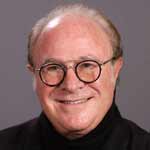 |
Dr. Malament received his D.D.S. from N.Y.U. College of Dentistry and a specialty certificate and Master’s degree from Boston University School of Graduate Dentistry. Dr. Malament has a full-time practice limited to prosthodontics in Boston that includes a dental laboratory with master dental technologists. A Past-President of the American Board of Prosthodontics, he is a Clinical Professor at Tufts University and a Course Director in postgraduate department of Prosthodontics. Dr. Malament is a Fellow of the American College of Prosthodontists, Academy of Prosthodontics, Greater New York Academy of Prosthodontics, and Northeastern Gnathological Society. He is an active member of many dental organizations including the International College of Prosthodontists, American Academy of Fixed Prosthodontics, American Academy of Esthetic Dentistry, Academy of Osseointegration, Northeastern Prosthodontic Society and American Equilibration Society. A Past President of the Academy of Prosthodontics, Greater New York Academy of Prosthodontics, Northeastern Gnathological Society, Northeastern Prosthodontic Society and the Academy of Dental Science American. He has served as the Secretary and Director of the American College of Prosthodontists and Secretary-Treasurer of the International College of Prosthodontists. He is the President-elect of the American Academy of Esthetic Dentistry. Dr. Malament has been the recipient of significant awards in Prosthodontics including the American College of Prosthodontists’ Clinician / Researcher Award, Daniel F. Gordon Award for Lifetime Achievement and Distinguished Lecturer Award, the American Academy of Fixed Prosthodontics’ George Moulton Award for Outstanding Achievement, the Greater New York Academy of Prosthodontics’ Distinguished Lecturer Award, the first Frank V. Celenza Memorial Award from the Northeastern Gnathological Society and the John McLean Lecture Award from the European Academy of Esthetic Dentistry. Dr. Malament was on the research and development teams for two different well-known ceramic products and developed instrumentation used in clinical practice. He is a consultant to three journals and has published significantly in the dental literature. Dr. Malament has been afforded the honor to speak often about prosthodontic issues concerning ceramics, implants and periodontics. |
Viva Learning is an approved AGD PACE Provider and California State Dental Board Provider of dental continuing education. Viva Learning strives to deliver balanced, objective and clinically relevant information grounded on scientific research. Lecturers who are invited to deliver Viva CE webinars are advised to substantiate their claims with research-supported data and to disclose all commitments to, or relationships with, any commercial entity within the dental industry. In many cases, lecturers are sponsored by a dental manufacturing company, which provides them with support in the form of honorarium and/or dental products and equipment in order to help with clinical presentations. Prior to each live CE webinar, lecturers are made aware of the importance of delivering their presentations without commercial bias, and where appropriate, to mention a variety of different product choices that may be relevant to the subject matter of the lecture, for the educational benefit of the participant.
Transcript
Welcome to the show. I'm Dr. Phil Klein. Today, we'll be discussing what the research shows
related to the use of lithium disilicate, specifically IPS-emax. Our guest and expert on the topic
is Dr. Ken Malament. Dr. Malament has a full-time practice limited to prosthodontics in Boston.
He was past president of the American Board of Prosthodontics. He's a clinical professor at Tufts
University and a course director in the postgraduate department of prosthodontics. Dr. Malament has
been the recipient of significant awards in prosthodontics, including the American College of
Prosthodontists Clinician Researcher Award. Dr. Malament, it's a pleasure to have you on Dental
Talk. Phill, it's a high honor for me. Thank you. Yeah, we've heard a lot about you, and it's really
nice to have someone like you with the background you have in research. And actually, you've been
studying and researching ceramics for over 40 years now. So let me ask you this. Why is this so
important to you, and why collect all this data, and what does it actually mean to the practicing
dentist? Well, I have been studying this on my patients since...
on the database since 1983 so i got involved with this initially um with my work at corning with
corning on dicor which i helped develop the point about it was i was presented with the question
how long do things last and should i should we know these things and uh i got involved with uh One
of my dearest friends, Sig Sikransky, who was world famous in periodontics,
but also a computer maven, but a statistics maven.
And he helped create with me the database.
We improved it. Why is this important? Because we're looking at trends.
We're trying to understand how materials break, in what situations will they behave best,
and in what situations will they potentially be a problem.
I've studied five different ceramic materials, each one specific and each one represented in the
database. We've written many papers. And the database has been used by the most famous research
team in ceramic science and fracture mechanics, chaired by Diane Recow and Van Thompson.
And we've written a lot of papers on the study. So why is it important? I'm always curious,
where is a smoking gun? What will work in my hands, my patients' mouths,
and in school? What would be the best material possible? Yeah, it's interesting because when I was
in dental school back in the day, we were told that crowns, full coverage crowns,
if they lasted more than five years, were doing well. And I don't know if I'm sure you remember
that anecdote that was prevalent across the schools in America. I'm sure your research has shown
that to be quite different, especially with the ceramics you're using. So what are the key findings
of your research during that 40-year period? Well, different materials behave differently in
different situations. We've seen just significant improvement in the materials as they are today.
The best material we had ever worked with prior, and this is including metal ceramics,
which is a bilayer material, meaning gold and ceramic.
I'm always interested in that. A monolithic material, which is the world we're principally living
in today, and a bilayer. So the best material we'd ever worked with before was Empress.
And I did 2,144 units. I had 127 real failures.
We wrote about that, and we studied that, and there were all these different confounding variables.
I mean, how do second molars react to incisors or bicuspids? Gender factors,
tooth preparation factors, what is the tooth that we're actually cementing, different cementing
factors, acid etch or non-acid etch. Today, unquestionably the best material I've ever studied,
and of course my work is independent of anybody, has been Emacs,
which is a lithium disilicate. I've done 4,037 units, and I've only had 28 true failures.
So this tells you a lot, but it also tells you about practice management within a dental practice.
We do a lot of restorations over that did not fail because treatment plans change.
And that is a critical factor in how we look at something and what we want to do in clinical
practice is try to keep our numbers as low as possible. I mean, as far as replacement,
but treatment plans change. I mean, one minute it's a single unit, next thing it's... It's a lot
more complicated. So we try very hard to pay attention to that fact. So your research not only
demonstrated the longevity of IPS Emacs, but it also validated the materials versatility.
I read some articles that you wrote and also articles that you were interviewed in.
And you talked about... you know, the three studies, you found no statistical significant
differences in the performance of the restorations based on where they were actually placed in the
mouth. Can you elaborate on that? Well, certainly molars present a higher risk than incisors.
Incisors present essentially no risk whatsoever. And that's true with all the other materials I've
studied. Tooth position is a factor, is a clinical factor. But from the point of view of
statistical significance, there is no real importance between whether I would cement a crown on a
second molar or whether I would present it on a bicusp or even incisor. Those things don't concern
me. The part that's fascinating and has been fascinating as the three papers went from 10 years,
10.9 years to 16.9 years, is this is the only database in the world that has been so thoroughly
researched with such great people. We look at these factors.
from the point of view of partial coverage now in europe a full coverage restoration is considered
um something that you you should never do a full coverage is sets up the whole spiral to go from a
fracture a failure root canal etc etc and and we have not found that to be in any way possible in
europe There are papers, and it is popular to do essentially a composite lingual or ceramic lingual
veneer and then a labial veneer on top of it. So you charge a patient for two restorations when
really a full crown would work perfectly. So the question I found fascinating was that there is no
difference between an inlay or onlay and a full coverage restoration.
No difference at all from the point of view of failure. And of course, all the other factors that
go into that. So let me just ask you this question on that. So a full coverage crown that has
subgingival margins doesn't have any performance difference statistically to an onlay where the
margins are super gingival that are much easier to clean? No, no difference whatsoever.
No difference. And that would be reflected in the database on restorations that were taken out for
other reasons. Now, remember something. clearly in my work i prepare all my margins right to
gingival crest and there are some situations that go a little bit subgingival, but that does not
happen often. But I've seen no discussion about a failure from the point of going subgingival or
saying supergingival. I have never seen in all the 38 years in the database,
I've never seen that to be an issue. So the idea that the margins ending right at the crest of the
gingiva is kind of a precarious location just due to plaque buildup, that didn't align with your
findings? That's an interesting statement too. My research with Sikransky showed that with high
-glazed ceramics, bacterial plaque doesn't stick to these materials almost at all. The biofilm just
is easily brushed off. So as opposed to gold or metal ceramic where you have an opaque line,
other materials. that are potentially rough like composite resin materials these materials absorb
and and grow plaque but not with uh zirconia or lithium disilicate or or dicor or any of these
materials so no that's never been an issue so so it's not so much the position of the margins it's
really the quality of the the seal how well the the restoration fits right that's true that's very
true and the fact that you can etch Empress,
Dicor, or Emacs, and then cement it with,
etch it and prime it, and then cement with a resin base or resin ionoma-based cement,
you're getting true adhesive qualities, and the materials don't pop off,
and they don't wiggle and warp. No, that's a big part of the story. And I might add that my paper
on acid etched dicore was the very first paper that showed that you get a much better survival if
you etch a ceramic or if you don't etch a ceramic. So you just raised a very important point.
With Emax and other materials, but particularly Emax, you get a better seal and a better adhesion,
and these crowns do not come off. I've seen only one,
two, maybe three restorations have ever come out with taffy or whatever.
That's just something I don't see, but I do see it with other materials, certainly metal ceramic
and certainly with zirconia. So let's talk about the strength of the ceramic itself. Dentists are
widely using zirconium now back in the posterior area, and their feeling is that it's just plain
impossible to fracture. versus with lithium disilicate, which is something that, you know, they may
leave for the anterior teeth. But based on what I'm reading about your research and your interviews
and so forth, IPS Emacs, you feel absolutely comfortable putting that in the back of the mouth.
No, no question about it. The fact is, there's other factors that go in to the strength of a
material. And if a material is not able to be dislodged,
or you get seepage or problems that will absolutely affect long-term survival.
I mean, when you look at the long-term survival on molars, you find that whether it be partial
coverage or any of the others, it's just truly remarkable to see what we find.
from the point of view of long-term survival. The bottom line is lithium disilicate,
it's about 98% survival after 16.9 years. And,
of course, that goes on. You have to recognize how many restorations I do. This is all a
prospective study. So, you know, our research parameters have been very clear. So up to this point
in complete coverage, I've done 1,888. posterior restorations, I've had 17 true failures.
Anteriorly, I've had 930 restorations and only one true failure.
A failure on the posterior with IPS-EMAX, is that a fractured? Yes. Okay, that's a fracture.
And that's what our team researches. We've studied... intensely how these materials break.
They break from inside out. Certainly wear has an effect, but it is what has been discovered in
research to be a semi-lunar type fracture. So you get a circular fracture at the margin,
and that would be a true fracture. Are those failures occurring early on,
or is that years later? I have one that went at six months, one at 49 months,
one at 96 months, one at 18 months, and one at 62 months. It's been fascinating for me to study
these materials. So it sounds like when we talk about IPS eMAX, we're talking about a material
that, in your opinion, is reasonably bulletproof. Is that correct? Yes,
it's absolutely true. And what you don't see here is... I'm a prosthodontist,
and I do reconstructions on severely worn teeth. And it's true I'll open vertical dimension up to
give me a little more height, but the bottom line is these are the patients that are in my
database. All these severe wear patients are in my database, and I see no factor that those
restorations are going to fracture at a higher level than anything. So if I would rather have a
material that I can, in fact, bond effectively than a material that might physically have stronger
factors. Now, remember something with Emacs is a monolithic material. It's highly controlled as far
as how it's made. From other materials, particularly zirconia, there are so many different
zirconias. And whether or not you bilayer it, put porcelain on top of it, philosophic porcelain or
not. That's when the chipping happens. But if you go a monolithic material, there's so many
different zirconias. Here, you have one material studied in its pristine fashion.
And I'm very confident in this material. And I'm very confident in what I do in my patient's
mouths. Yeah, it sounds fascinating. There's nothing better than solid research over decades like
you've done with your colleagues. What about gold? You know, I have gold full crowns in my mouth,
and I actually insisted that these prosthodontists that I've worked with over the years put them in
just because, you know, I know how compatible they are with the periodontal tissue, and I know how
reliable good gold crowns are. Well, I just have to stop you there for a second.
Yeah. Gold absorbs a lot of plaque. Gold is thermal sensitive.
Gold margins are excellent, but so would be Emacs, where the margins actually technically can be
even better. I did the American Board of Prosthodontics exam. I did it all in gold. Today,
I would wonder, even though I'm acid etching teeth and I'm dentin bonding and I'm doing it and I
sandblast the gold, I would only use it in a... truly a high wear situation and i'm a little
nervous about that and it's always usually on a second molar but today the gold is the best
restoration today i would argue very strongly of that that's just not true anymore you're basically
saying ips emacs is probably the most impressive high performance material you can use in indirect
restorative dentistry yes that's what i'm saying and i have the data to prove it the other point
about it is I practiced with the great Bob Stein for years and years. I bought his practice.
So I have onlays that are still in patients' mouths that he did, and I've done it as well.
But when you look at partial coverage restorations and you see how successful they've been with it,
minimally invasive procedure, but that I'm bonding specifically to enamel and dentin,
the survival rates on partial coverage are just outstanding. And it's hard for me to believe that,
in fact, this is not the truth of what this story is.
I mean, I'm looking at essentially 98.3 survival function after...
10.9 years, and I could look at the data at 16.9 years,
a partial coverage at essentially 95.3% and complete coverage at 96.7%.
So at 16.9 years, if a restoration has stayed in the mouth,
it owes you nothing. That's one way to look at it. I think this type of restoration is ideal.
Look, it's very hard for me to sell gold to my patients, and I have a very high-end practice,
but patients want white. I will not do plastic fillings. I will not do composite resin,
but I will do ceramic inlays and onlays all day long, and patients like it. Let me ask you this.
When it comes to purchasing anything in a dental office, the doctor wants to make sure that the
company is going to be around to support them. And they're not going to just sell them something
and then not provide the technical support they may need or whatever else goes along with buying
materials and products, not only consumables, but also equipment. So how do you feel about Ivoclar
Vividend as a company that has your back, so to speak, when it comes to purchasing and using IPS
Emacs in your practice? Well, first of all, I'll say one thing. Emacs is the least expensive
material, ceramic material we have. for anything now it's it's less expensive if you press it than
if you can't cam it but the cat cam blocks are less expensive than the composite resin blocks so
emax is dirt cheap compared to anything we've ever done it's like off the charts cheap now the fact
that you know they have a plan to support you if a restoration breaks i i think that's great i mean
i It's not going to affect me at all because, one, I have my own lab, and two, it's really not an
issue. But for the general population to have somebody say to you that they're going to support you
if this restoration breaks, I think the statistics are strong on their behalf.
I think it's... I've never heard that in a company. I mean, you know, they play this game with
implants that they'll pay for the implant, but they don't talk about the prosthesis. They talk
about the implants. They'll give you a free implant, but they don't talk about the prosthesis or
the time that it's taken. So in most respects, that's sort of a shell game. But from the point of
view of Ivoclar supporting you, that's just off the charts good. Well, Dr. Malament,
this has been very insightful. We certainly have enjoyed your input, and we don't often get to
speak to researchers worked on this for four decades and have the data to prove it.
And I could say one thing, when you prescribe a restoration to your patients and it's IPS-EMAX,
you have full confidence while doing so. We appreciate all your thoughts and hopefully our audience
gained something from this. And if you want more information, go to Ivoclar Vividend's website,
which is ivaclarvividend.us. One last thing. I don't work for Ivoclar.
I don't have anything to do commercially with that. My research is my research that I've done with
Dr. Sakransky, who's passed away, and now my research team. And studying ceramic materials is just
tremendous fun. So I want to thank you, Phil, for inviting me. It's really been a great honor,
and I hope your audience will appreciate this and learn from it. Thank you very much.
Thank you.
 Episode 787. Clinical Pearls for Esthetic Composite Dentistry: Material Selection, Cutback Technique, Occlusion and More
7/20/2026 - CE Credits: 0.5 CEU (Take Exam)
Episode 783. The Challenges of Being a Mom and a Dentist: A Candid Conversation with Dr. Christina Blacher
7/6/2026 - CE Credits: 0.5 CEU (Take Exam)
Episode 779. Inside a High-Tech Dental Practice: Digital Workflows, AI, and Clinical Precision
6/22/2026 - CE Credits: 0.5 CEU (Take Exam)
Episode 717. Veneer Success Simplified: Invaluable Tips from NYC Prosthodontist Dr. Graziano Giglio
11/3/2025 - CE Credits: 0.5 CEU (Take Exam)
Episode 713. From Blocks to Furnace: Unlocking Same-Day Zirconia Success
10/20/2025 - CE Credits: 0.5 CEU (Take Exam)