







| Dental Podcast Episode - The Dr. Phil Klein Dental Podcast | Listen on: |

|

|

|

|
and others. |
Episode 365: Curiosity is the New Superpower for Career Fulfillment
 |
Disclaimer
Viva Learning LLC sites offer content that include opinions, techniques, recommendations, etc. from a variety of writers and speakers that are not necessarily endorsed by Viva Learning LLC, its associates and sponsored Viva Affiliates. Viewers are responsible for verifying the validity, accuracy and relevance of all content before implementing any techniques, products or recommendations into their clinical setting. Viewers understand that Viva Learning LLC, its associates, writers, speakers and sponsored Viva Affiliates are not in any way responsible or liable for any adverse events that may occur (i.e., in a clinical setting or anywhere) based on any information disseminated from Viva Learning LLC sites, including all Viva Learning sites.
The copyrights and other rights to the slides and video contained in a webinar posted on this website are owned by the speaker, Viva Learning LLC, and/or the sponsor company and/or its subsidiaries worldwide. Viewers are only authorized to view the content of the webinar (live and archive) at this Website and are not permitted to screen capture, record and/or download any content displayed in this webinar. You may not make any part of this Website available as part of another web site whether by hyperlink framing on the Internet or otherwise.
The copyrights and other rights to the audio contained in a Viva Podcast are owned by Viva Learning LLC. Viewers are authorized to listen to the content of the podcast and are permitted to download any podcast for personal use only. You may not, however, make any part of this Website available as part of another web site whether by hyperlink framing on the Internet or otherwise.
By signing up for a free webinar and/or podcast you give Viva Learning LLC and/or its Viva Learning Affiliates permission to send you emails alerting you to future CE opportunities and e-learning content.
California State Dental Board Provider Statement
Viva Learning is a registered continuing education provider in the state of CA. Dental Board of CA Provider #RP 5747. Approved through 6/30/2026
Questions regarding our Conditions of Usage, Privacy Policy, or other policy related material can be directed to our support staff by clicking on the "Support" link or you can email us at: support@vivalearning.com.
Approval does not imply acceptance by any regulatory authority or AGD endorsement.
Approval period: 11/1/2025 - 10/31/2029. AGD Provider # 217544
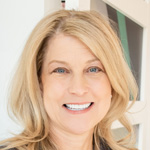
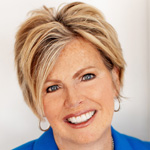
Presenter Information: Amanda Hill, BSDH, RDH CDIPC
 |
Amanda likes to describe her career in dental hygiene as an adventure. Growing up in and then marrying into the military she has had the opportunity to experience life and dentistry all over the world. Amanda had the good fortune to begin her dental career in an office where excellence was the norm. She had the chance to be stretched and challenged while traveling for courses and learning the latest in clinical care and patient communication. Thus developing a love for learning. Through her adventures around the world, she became obsessed with finding ways to continue her education and stay current and in connection with the dental industry. Amanda practices part-time and is an industry educator and consultant. She is a speaker, award-winning author, and host of the Your Dental Top 5 podcast. A member of the advisory board for RDH magazine and OSAP’s Infection Control In Practice Editorial Review Board, Amanda strives to make topics in dentistry accurate, accessible, and fun! She can be reached at www.amandahillrdh.com and AmandaHillRDH@gmail.com |
Viva Learning is an approved AGD PACE Provider and California State Dental Board Provider of dental continuing education. Viva Learning strives to deliver balanced, objective and clinically relevant information grounded on scientific research. Lecturers who are invited to deliver Viva CE webinars are advised to substantiate their claims with research-supported data and to disclose all commitments to, or relationships with, any commercial entity within the dental industry. In many cases, lecturers are sponsored by a dental manufacturing company, which provides them with support in the form of honorarium and/or dental products and equipment in order to help with clinical presentations. Prior to each live CE webinar, lecturers are made aware of the importance of delivering their presentations without commercial bias, and where appropriate, to mention a variety of different product choices that may be relevant to the subject matter of the lecture, for the educational benefit of the participant.
Transcript
Welcome to the show. I'm Dr. Phil Klein. Curious people ask questions about everything,
their job, their technology, their relationships, and even their patients. Today, we'll be
discovering the five pathways of curiosity and how to reignite your passion for dentistry,
reinvigorate your practice, and revitalize your patient experience. Our guest is Amanda Hill,
Clinical Education Manager at Young Innovations. As a speaker, podcaster, member of the advisory
board for a variety of dental publications, Amanda strives to make topics in dentistry accurate,
accessible, and fun. Before we get started, I would like to thank our sponsor, Young Innovations, a
company that continues to build on its rich legacy of manufacturing and supplying high-quality
products designed to improve the clinical experience for dental professionals and patients. I would
like to personally thank the folks at Young Innovations for sponsoring this podcast. and their
continued efforts to support dental education and professional development. Amanda, it's a pleasure
to have you on the show. Thanks for having me on, Phil. I'm excited to be here. Yeah, and
congratulations on your podcast program. That's exciting. And maybe before we end,
you'll tell us a little bit about that. And we can send some people over there to listen to the
great things you're talking about. So to begin, what are the five pathways to curiosity? So when I
came up with this concept of really thinking about... curiosity it actually funny enough it started
from a graduation speech i gave to a dental hygiene class and so i was going to think of the top
five traits i thought a hygienist needed to have a successful career but funny enough what kept
coming back to me was curiosity And if we remain curious within our profession and our lives,
I think that we'll be successful. And so I kind of came up with five pathways and I had to make an
acronym so I could actually remember them because, you know, as we get older, we don't remember
things anymore. So I came up with the acronym SPECT, which is the Latin root to C, which I thought
really worked well with curiosity. And so it's being curious about ourselves, you know,
who we are, what ignites our passions. What are we about? How to take care of ourselves?
And then the P is profession, staying curious about our profession and understanding about
advocating for our profession and understanding what it means to be a part of our career.
And then the E is education, always staying part of that education and really always forever
learning, never becoming a knower, but always remaining a learner. And then the C is our clients or
patients. P didn't work because I'd already used it for profession. So remaining curious about our
patients and not assuming their motivations, but really trying to get into their why and
understanding who they are. And then the lastly is T, team. So important that we remain curious
about our teammates. When we assume, we all know what that means, right? And so it's really
important for us to remain curious about our teammates' motivations or what's going on in our
teammates' lives or how can we get along in our practice so that we're all successful together. So
that's how I came up with those five pathways. Maintaining a high level of curiosity obviously
invigorates the practice because it allows you to think through the processes and the systems in
your practice, the people in your team, and identifies weak points.
places where you can improve, and that obviously lends itself very well to career satisfaction and
a successful practice, right? So you did mention education. Why does education play such an
important part in career fulfillment? Well, first off, I would say learning is exciting,
right? You know, some people say that dental hygiene, if we listen to that lobbyist in Illinois
that said all that hygienists do is all we do is scrape teeth, baloney. We do so much and there is
so much that we can learn and continue to grow from. And so when we get to learn and when we stay
part of our education, we stay excited about our careers. We don't burn out. We don't go,
oh, I have to go into work again. We get to learn that there's new technologies out there. I think
about when I graduated from hygiene school, you know, I only knew about one kind of instrument. I
had no idea that there was sharpened free technology out there.
You know, you think back in the day, hygienists, they polish teeth using a port polisher.
You know, there's little wooden wedges, right? Now we have cordless handpieces that help us with
ergonomics. I mean, so that helps with career longevity. But by staying part of education,
I get to learn more about this technology that is helping my profession and helping me treat
patients. And I think part of it, remaining educated and remaining sort of on the cusp of what's
going on in dentistry or in any profession, really, is you really know that you're doing your best
by your patient. You know, you understand that that I know that I'm using the best things that I
can to help them be successful. And then, like I said, it really, I think, helps you avoid burnout.
You find that passion. Maybe your passion is in oral. facial myology,
or maybe your passion is an oral systemic connection, but you're only going to know that if you
remain educated, if you keep going to classes. Heck, if you take classes that don't even count for
CE, just because it ignites your fire and it really gets you excited about your profession and your
place in the community. Yeah, and it's changing so quickly. I mean, there's so many technologies
out there, like you mentioned a few. And also continuing education is... available now,
you know, through the internet. Whereas years ago, you had to take time off from work and you had
to plan it and travel. Today, you log on and you can take a webinar,
for instance, and I guess I can plug Viva Learning. Viva Learning is quite an active site with, I
think we're doing like over 70,000 webinar views per month now. It's just, it's crazy. But the
availability of this information is so much different than it was years ago. There's actually no
excuse not to really stay up on things. But like you said, it's a great thing to do to maintain the
excitement of your practice when you're learning about new things that you can apply every day to
your patients. So when it comes to patient communication, how can we tap into the patient's why?
I think really taking time to understand what motivates our patient is something that we should
always stay curious about. And it's for many reasons. One, it certainly, if you want to get to the
bottom business line, That's how people accept treatment. You know, that's case acceptance. That's
include, you know, that's increasing the bottom line, but really it's about helping that patient
get to that point of health and wellness, which is really what we all want. Right. And so, and so
if we can get curious and learn ways of communicating with patients to not just say,
you know, not just sit them in the chair, any changes, no. Okay. And you go about and you do your
appointment. but really understanding what their motivation is and not assuming, oh, you know, all
that treatment that they're saying no to. They're saying no to because they're cheap or they're
saying no to because they're afraid or they're saying no to. You know, we can make up all these
stories in our head, but unless we take the time to really get into a patient's why, we're really
missing out on that opportunity to connect with them. I'm a big fan of motivational interviewing.
It's a really great way to stay curious. You know, you start off with really open-ended questions.
You know, why, how, tell me about, describe. I like to, you know, tell me about your home care
routine. Not like, are you brushing and flossing? You know, so you can get some more information.
You can get some buy-in. Tell me what you like about a dental hygiene appointment. Tell me what
you don't like to really understand what makes a patient comfortable. And when they feel more
comfortable, they're going to be far more apt to give you the information about their why.
We work really hard. Something we've started now in my clinical practice is that when you click on
a patient's name, you know how you can have that alert come up and, you know, whatever. software
you use. Now that alert has our patient's why. So each of us,
when we get to our patient's why, maybe our patient's why is his grandmother lost his teeth or her
teeth, and that really freaks him out. Oh, okay. Patient is, you know, very concerned about losing
teeth. Or maybe the patient's why is, you know, they're really into health and wellness. Okay,
let's put that down. And so, but putting it as an alert. So once you've taken the time to really
dig into that why, using motivational interviewing, and then making sure that it's front and center
so everybody knows it. And oh my gosh, the amount of time you save trying to give them technical
information that they don't care about. But if you can link it back to grandma's dentures, oh my
gosh, it took you two seconds to give that case presentation. And you were successful as opposed to
30 minutes and the patient still said no. And so really remaining curious. Yeah, no, that's a great
point. So the important thing is to have the conversation and get this information that connects to
them so that you could move forward with getting higher compliance, getting them to accept
treatment plans. But if you don't identify what that is in the patient record, then you're
identifying this information, but no one knows about it. If you're not there anymore, or even if
you are there, you don't remember it. That's a very important point is to take these key
discoveries that you make about the patient during initial conversation and documenting them so
that you could use them again strategically. And you're not manipulating the patient, but you are
connecting with them, right? In a positive way. Absolutely. Absolutely. And that's why you don't
want it down five hygiene notes deep because you're going to lose it. But really finding that
connection and that why might change over time. And that's when you edit the why and you bring up a
new why and maybe you'll learn more. But no, it's not about manipulation. It's about truly treating
that patient and helping them understand. And when we get to our why's, we all kind of understand
more. Yeah. So the key thing is that you want to connect with the patient because you get more done
when you connect with people in general and all types of businesses, not just dentistry, of course.
Let's talk about the difficult conversation. Give us an example of a conversation you're going to
have with a patient where curiosity helps you get through it in a positive way. Otherwise, you
would be really struggling with that patient. Absolutely. So one thing that we like to do in my
clinical practice is we use something called the awareness wheel when we have a difficult
conversation. So, you know, maybe we're going to talk to a patient, you know,
maybe they're always late for their appointments. And so how do we have that conversation, right?
Do we just... them and lie and tell them their appointment's 15 minutes early. And then that one
time we make them wait, well, we've screwed that up. No, I mean, really let's be honest and let's
treat everyone with respect. And so the way the awareness wheel works is it starts out with one,
which is data or facts. You know, Mrs. Smith, you've been late for five appointments in a row.
You know, it's just, you know, flat, easy. And then Mrs. Smith can respond. You know,
then you move on to imagine. I imagine, Mrs. Smith, that you're late because,
you know, you don't believe that we run on time. Or I imagine, Mrs. Smith, that you believe that
your appointments aren't all that important or whatever you imagine. And then how you feel.
Three is feel. So, Mrs. Smith, you know, it really makes us feel frustrated when you show up late.
We run behind. It affects other patients. And then four is need. Mrs. Smith,
I need you to make an agreement that we can come up with a time that you can commit to. So what
time of the day is best for you? And then five is an agreement. And so then you come up with that
time and you go from there. But when you can stick to that awareness wheel, what I like about it is
it gives me an SOP. And as a hygienist, I love a good standard operating procedure, right?
Because... goal in life is to make everybody happy. And I hate difficult conversations. It is not
part of my personality. But if I have an SOP to stick to and I go, okay, now I'm in facts. Okay,
now I'm in imagine. Okay, now I'm in how I feel. Now I'm in needs. And now I have an agreement. I
feel like I can navigate it in a way with confidence. And I think when we speak with confidence,
we're less like, um, uh, well, uh, sorry. You know, we're really just kind of laying out those
facts and making that agreement happen in a way that both parties feel comfortable and nobody feels
attacked. And this works really well with our teammates too. So when you have that difficult
conversation and you just kind of simulated that, when you get that pushback from the patient in
the beginning about, Mr. Smith, you've been late five appointments in a row. I mean, somebody's
going to be on the defensive there, right? I mean, so maybe Mr. Smith, most likely. What do you do
there when she becomes very defensive? So I think you really just try to stick with the facts. So,
you know, whatever Smith says, you know, no, I haven't. Well, you know, Mrs. Smith, when I look at
your chart here, this is what I see. Perhaps things have come up. I imagine that you have a really
busy life. So now we've gone to a different imagine. I imagine that you have a really busy life.
And I imagine that it's probably hard for you to get here. But and then you go into feelings, you
know, and then she might say, yes, you know what? It's really hard. Yeah. If I respond by saying.
The last dentist I went to literally kept me waiting in the waiting room, minimum 20 minutes every
visit. So I come about 15, 20 minutes late figuring by the time I sit down,
they'll call me. I mean, that's the experience I've had in the past and that's why I'm late. What
do you say? And then you go, wow, Mrs. Smith, that sounds like that was really a frustrating
experience. We at our office try really hard to make sure that we run very on time so that we
respect your time. And by us respecting your time, you know, we need you to respect our time so
that we're respecting everybody's time in this practice. So no matter what my response is, you
still work that wheel, right? You move to the next. Continue to work the wheel. Yeah, but you try
not to move on to each step until you have an agreement at the first one. So data and facts.
So if Mrs. Smith is going to argue that she was not late five times, you need to have an agreement
that Mrs. Smith does agree that she was late five times. And then before you move on to how we
imagine. And kind of it's, you know, it's just sort of an ebb and flow of a conversation that each
person kind of gets to have their say. But you try to move in so that way you don't go off onto a
tangent where it does feel attacking. So is this SOP? go through the entire practice with the other
hygienists and everybody else in the office, or is it just your SOP? This is our entire practice.
This is our entire agreement in our practice. So let's say I get mad at Karen because Karen isn't
pulling her weight in central sterile, and I feel like I'm doing all of Karen's instruments. Well,
I'm going to talk to Karen in this way. I'm going to, you know, and Karen knows that that's how I'm
going to talk in that way. So it really helps us. Right. And that does seem to be very positive for
your practice amongst your employees, between your staff and the patients, the general culture of
the practice is using this, this wheel concept. Absolutely. Yeah. And it's a great one to even,
I've used it when I was asking my dentist for all new instruments. You know, which for me was a
really nervous thing, like, oh, my gosh, I'm going to ask him for new instruments. What if he says
no? What do I do? And so I wrote the whole thing out and how I was going to present sharpen free
technology to him. So I really wanted new sharpen free XP technology. And so I let him know the
facts that our instruments were three years old and they were dull and they were broken and they
had this new technology out there that was really going to save us time. And we went through it
that way and I got my instruments. Excellent. Would this work with my wife, this technique?
Absolutely. It will totally work with your wife. All right, I'll let her know. But she gets her say
too, remember. Yeah, I know. She's going to work the wheel with me. I don't know if I can handle
that. I won't get past the facts part. Because you're probably wrong. Plausible deniability here.
Yeah, so that's very interesting. I've done a lot of podcasts. I think we're close to 400 episodes,
and I haven't heard this at all. It sounds like something that could be very, very useful for a
dental practice. So in closing, we covered the basic stuff, which we wanted to cover on this
podcast. We certainly thank, again, Young Innovations. Tell us a little bit about your podcast
program before we close. Oh, thank you. Yeah, so I have a dental podcast called Your Dental Top 5.
where we take trending topics in dentistry and break them down into five highlights that I like to
say you can take back to your op, your life, or look smarter at your next dinner party. So it's
just kind of all over the board topics, but we kind of break them down. It's a nice short 15
-minute podcast, much like yours. And it's a lot of fun. And I just had my 100th episode.
Congratulations, Amanda. That's a lot of fun to do podcasts. And the best part of it for me is that
I get to interview all these smart people that I learned so much from. So hopefully our audience
feels the same way. Amanda, again, thank you very much for joining us. And we hope your podcast
program is successful, which I think it already is. And we hope to have you on another one soon,
too. Thanks so much, Phil.
 Episode 719. Investing in Ergonomics: A Win for Hygienists, Dentists, and Patients
11/10/2025 - CE Credits: 0.5 CEU (Take Exam)
Episode 663. CBCT, AI, and Implant Success: Insights from Dr. Steven Vorholt
4/28/2025 - CE Credits: 0.75 CEU (Take Exam)
Episode 520. Oral Surgery Simplified with Piezo Technology
12/18/2023 - CE Credits: 0.25 CEU (Take Exam)
Episode 456. Clear Aligners in General Practice: Ortho First and Then Do Great Things
2/27/2023 - CE Credits: 0.25 CEU (Take Exam)